

Some Context:
Because my LMT practice niche these days is “somatic bodywork,” I often have clients ask me what, exactly, “somatic” means. What is somatic bodywork? The thing about describing somatic practice is that these practices are qualia: things that cannot be adequately described to those who have not experienced them. For example, try describing the color blue to someone who has never seen it. Try describing the sensation of engaging the perineal diaphragm while breathing to someone who has never taken an unrestricted breath of air or fully felt their pelvic floor (a common condition in the context I practice within).
That said, as I once heard somatic bodyworker Zoe Poulette say, “Somatics are The West’s response to chronic disembodiment” (individually, culturally, collectively. It’s worth noting that many of the practices found in “Western” Somatics come from other, often uncredited, origins (traditional practices from the Cherokee, the Maya, traditional Chinese Medicine, and the Vedas just to name a few).
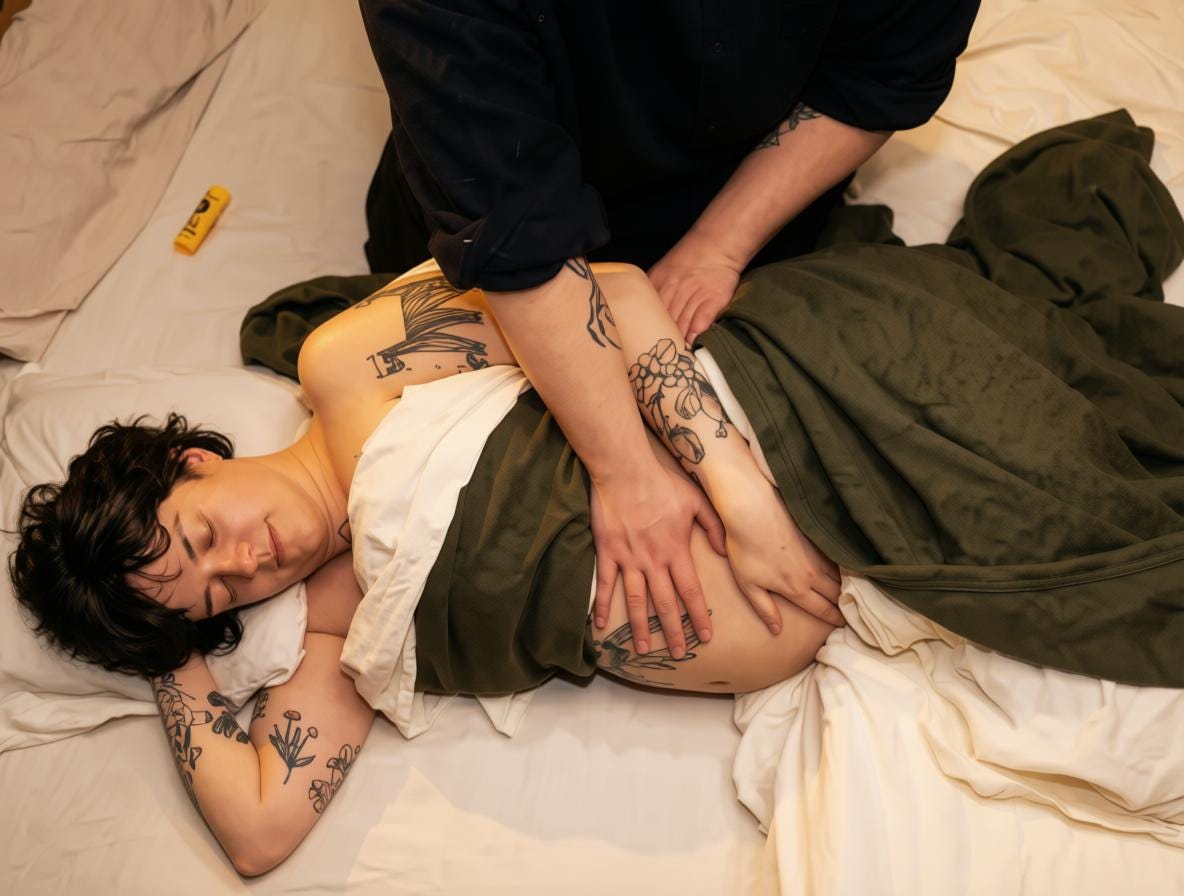
More specifically: somatic bodywork looks like learning to feel parts of your physical body you have never felt before. It looks like learning to take a full breath of air. Like internally mapping your own body. Like being still and quiet as you drop your awareness low in your body. Like relaxing more and more deeply, moving through layers and layers of tension, feeling deeper and more subtle tensions that you couldn’t notice until the more dramatic ones were cleared away. Like learning to identify and truly feel the physical textures of your emotions. Like unravelling alienation from self and others. At the risk of sounding too corny, somatic bodywork feels like coming home to yourself.
So, getting to the point: what can you expect from a bodywork session with me?
My unhelpful answer is that…. it depends.
My more helpful answer is that it depends specifically on what you’re coming in for. A no-nonsense client coming in for support with recovery from a shoulder injury will get an equally no-nonsense by-the-book evidence-based therapeutic intervention utilizing movement, interoceptive/proprioceptive engagement, and manual therapy. A client coming in because they need support with grief or anxiety may get guided meditations, attuned touch support, and somatic inquiries. A client who loves a bit of mystery and a journey through the strange points of connection that bind us all together might also get a tarot reading as part of their session.
But what all of these clients can expect in common is attuned responsiveness to their particular situation, needs, and boundaries. They can expect to collaborate with me on what tools and methods are going to best serve them in the moment.

To get more granular, what follows is a typical flow for an appointment:
You’ll book via my booking portal which you can find here.
You will arrive at my office, punch in the door code that you receive via text reminder, and sit in the waiting room on one of our accessible benches / chairs.
When the clock strikes your appointment time, I will come to collect you and bring you back to my private office. There will be tea and snacks available.
You can expect that I’ve already reviewed your paperwork. We’ll sit and discuss your situation together and get a clear sense of where we want to go and how we want to try to get there. I’ll emphasize to you that I actively want and need your feedback throughout our session in order to make the most of our time together and to move at an optimal pace for your body’s integrative capacity.
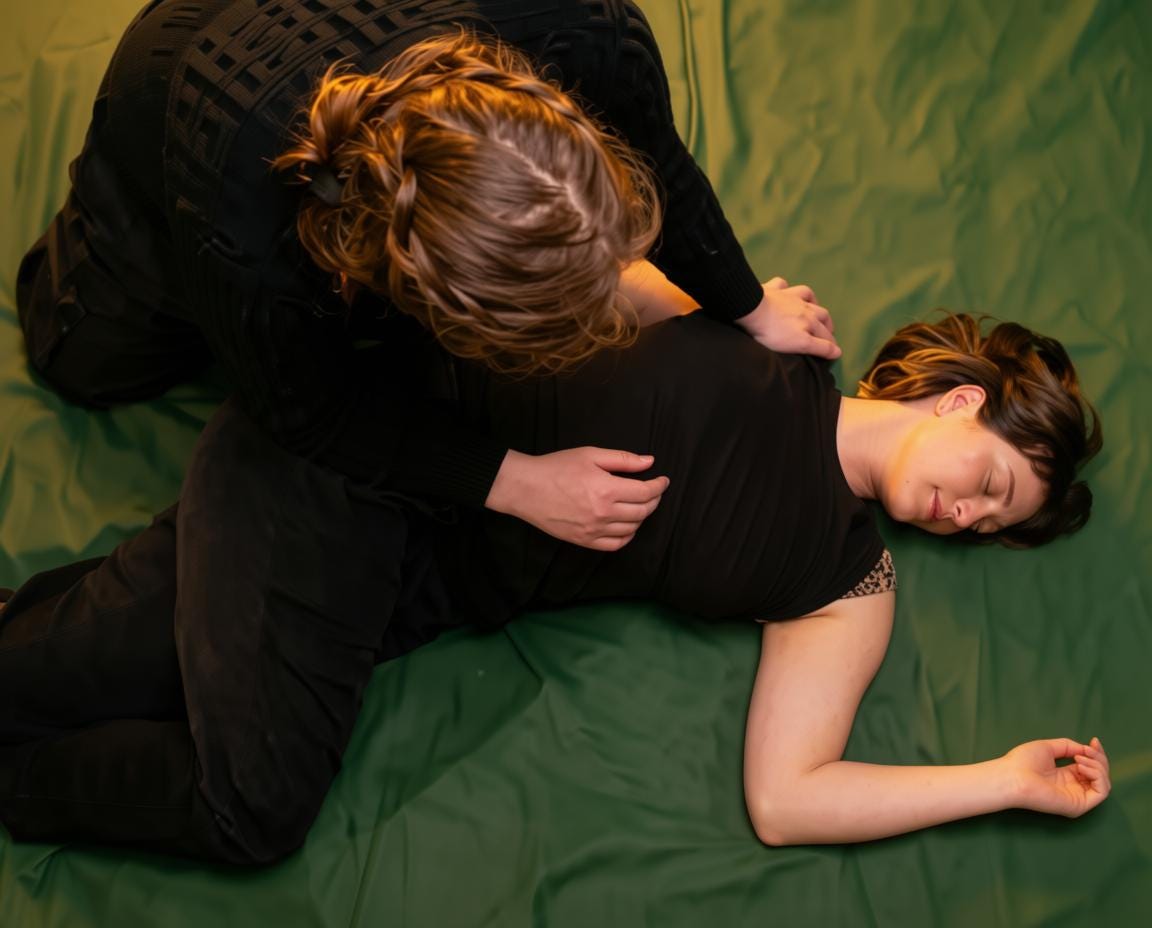
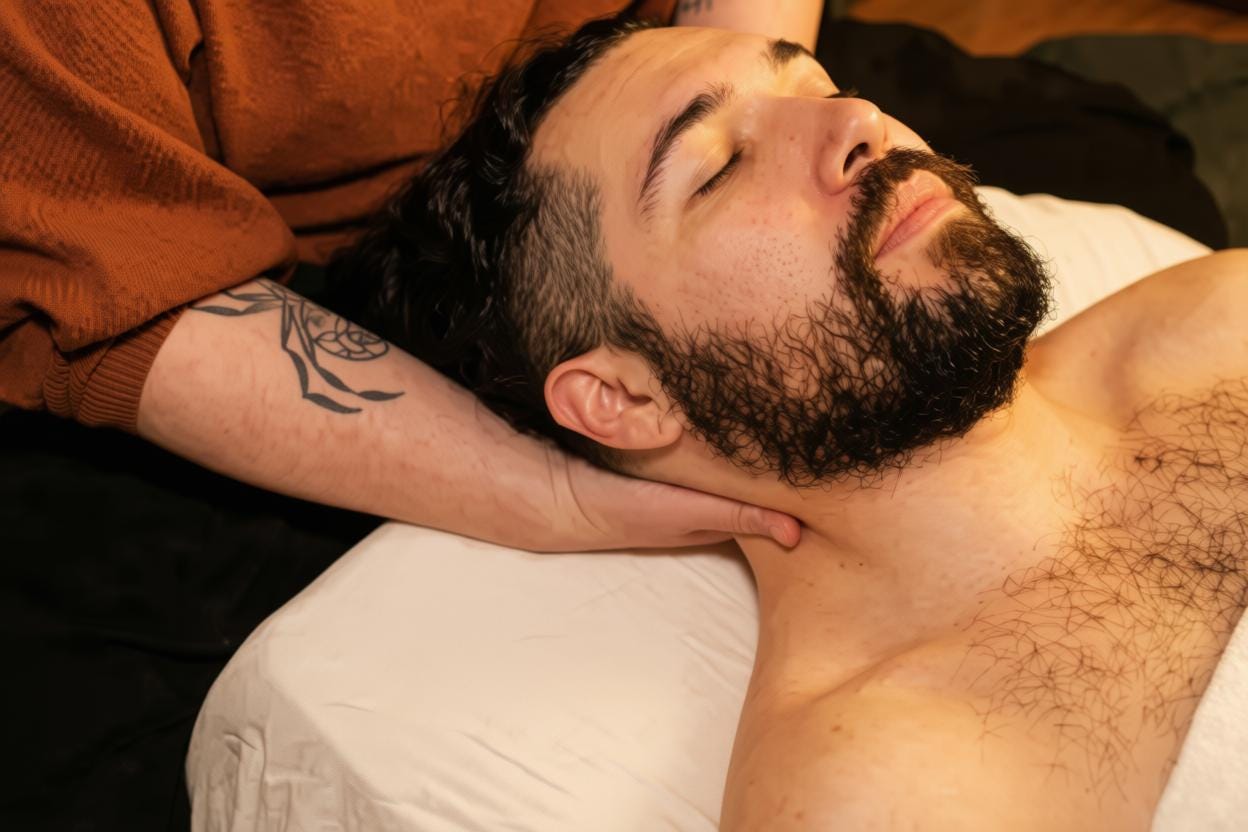
After we finish checking in and establishing rapport, we’ll move into the therapeutic work. We may do movement work, body reading, somatic inquiry, dynamic manipulations, or just head straight to the mat for some touch support and/or manual therapy.
I’ll check in with you as we go to make sure that you’re doing well and that our work together is feeling effective. If you’re ever not doing well, we’ll prioritize addressing what’s happening and re-orienting to your embodied boundaries as needed.
Once we finish up, we’ll have a little bit of time at the end to sit together and check-in: I’ll ask you what you’re feeling and if you have any thoughts, reflections, or questions about our work together. You’ll pay me cash (unless you’re trading something for my work or paying with an FSA card). I’ll likely send you home with some exercises of various kinds to try, as relevant to your situation.
And that’s all I have to say about that for now.
If you’re interested to have the real life experience, consider booking something with me.